India's personal loan market has exploded - growing from ₹6 lakh crore in 2020 to over ₹12 lakh crore in 2026.
A personal loan is not a single product. It is an umbrella term covering a dozen different types - each designed for a specific borrower profile, need, or purpose.
Choosing the right type matters. It affects your interest rate, documentation requirements, approval speed, and total cost. This guide covers every type of personal loan available in India in 2026. Before we start, let us find the latest highlights related to personal loans in 2026.
Latest Highlights: Personal Loan Market in 2026
The following are the most recent updates and changes in personal loans in 2026:
A significant 2026 trend is integrated point-of-care lending - hospitals are now partnering with fintechs for instant EMI conversions at the billing desk, often at lower rates than general-purpose medical loans.
The "Travel Now Pay Later" trend has evolved into formal travel loans with Forex card features - some lenders now pre-load loan amounts onto travel cards at competitive exchange rates.
Most personal loans now use reducing balance interest calculation - avoid any lender quoting a "flat rate" without converting it to a reducing balance equivalent.
RBI's zero prepayment penalty rule (January 2026) applies to all floating rate personal loans - repay early without any pre-payment charges.
The Three Frameworks for Classifying Personal Loans
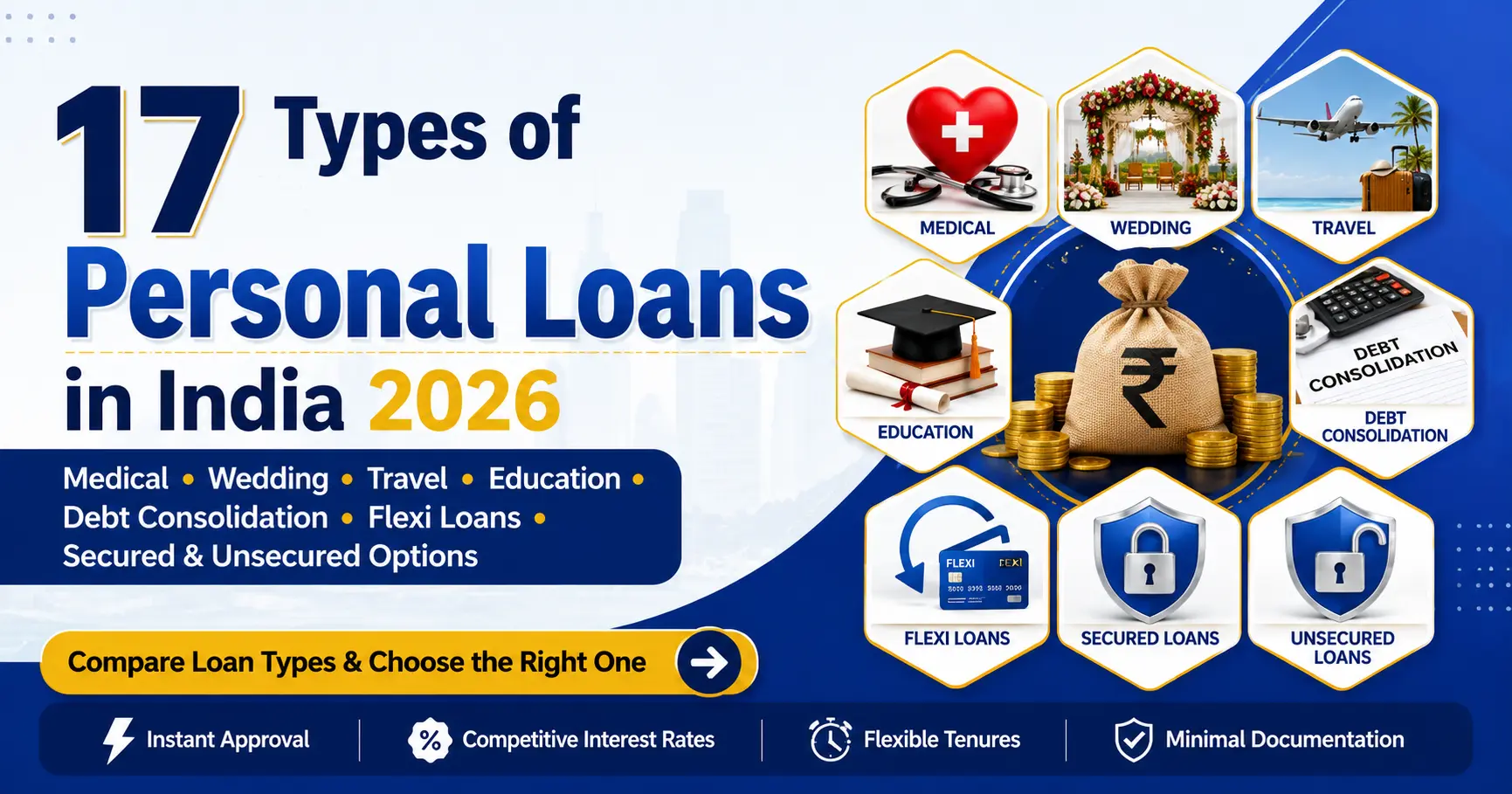
Now, for easy and clear understanding, we have divided the personal loan in three frameworks:
Framework 1: By Purpose - what the money is used for
Framework 2: By Borrower Profile - who is borrowing
Framework 3: By Loan Structure - how the money is disbursed and repaid
Understanding all three helps you find the product that fits your exact situation - not just the nearest approximation.
Framework 1 | Personal Loans by Purpose
Let us understand how personal loans can be classified on the basis of their purpose:
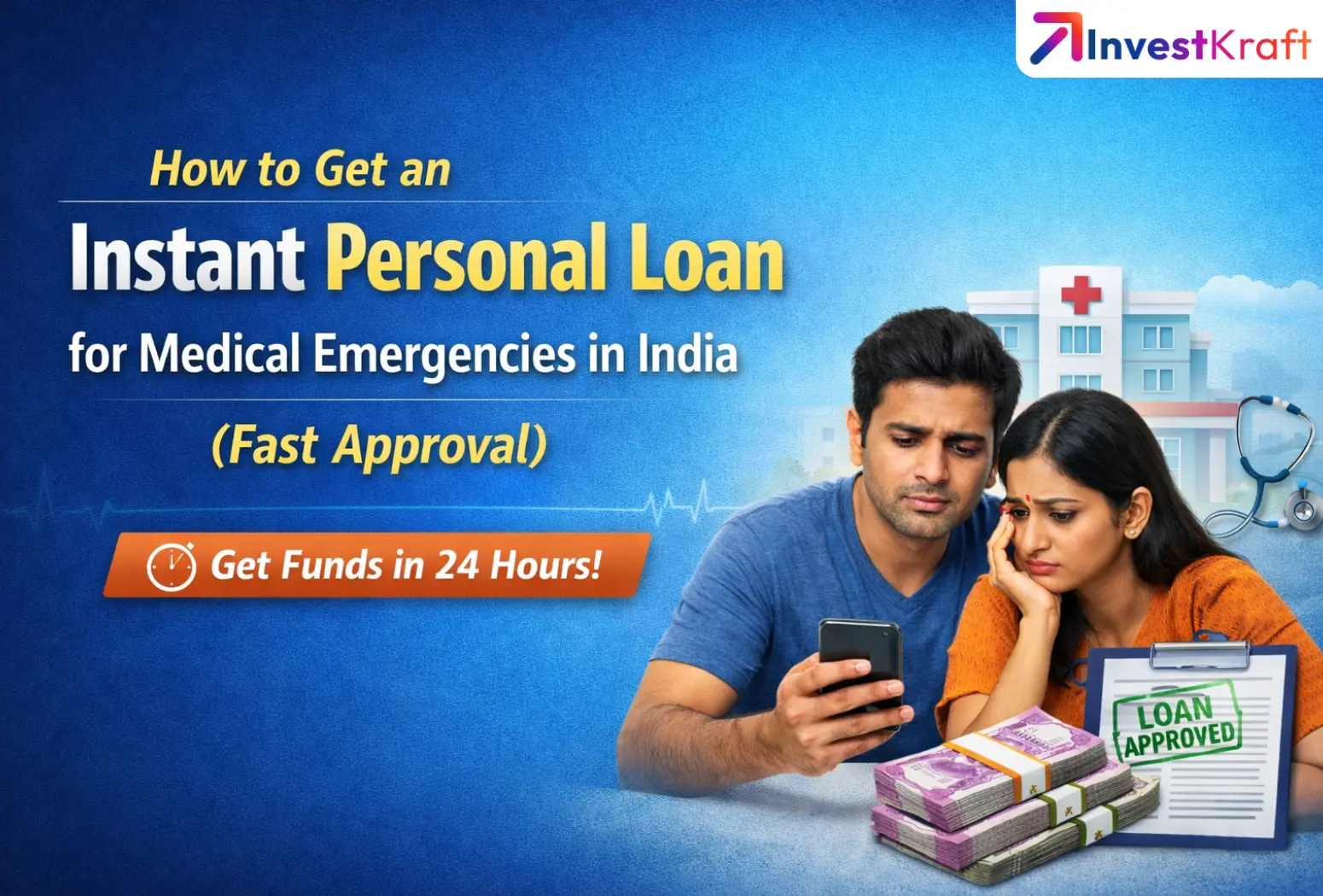
Arguably the most important type. Medical emergencies do not wait for paperwork.
With rising healthcare inflation, medical loans have become an essential safety net. Unlike standard personal loans, these prioritise disbursal speed for surgeries, specialised treatments not fully covered by insurance, and post-operative care.
Key features are as follows:
Priority fast-track processing, meaning funds will be available within hours in most cases
Some lenders accept a hospital admission letter for sanctioning emergency amounts
A significant 2026 trend is integrated point-of-care lending, where hospitals partner with fintechs for instant EMI conversions at the billing desk Interest: 10% to 18% per annum
Amount: Based on treatment cost - no upper restriction in principle
Best for: Anyone facing a sudden hospitalisation, surgery, or medical expense not covered by insurance.
Indian weddings cost between ₹5 lakh and ₹50 lakh for a mid-to-large ceremony. Wedding loans are standard personal loans marketed specifically for wedding expenses - venue, catering, jewellery, honeymoon, photography.
Key features are as follows:
Interest: 10.5% to 20% per annum
Amount: Up to ₹25 to ₹40 lakh, depending on lender and profile
Tenure: Up to 5 years
No receipts required from wedding vendors - end-use flexibility
Best for: Couples and families who want to fund a complete wedding ceremony without liquidating savings or investments.
A standard personal loan taken specifically for home improvement - painting, flooring, plumbing, electrical upgrades, modular kitchen, or adding a room.
Key features are as follows:
Advantage over home loan: Faster processing, no property valuation required, no mortgage
Tax benefit: Interest deductible up to ₹30,000 per year under Section 24(b) for self-occupied property (old tax regime).
Interest: 10.5% to 18% per annum
Amount: ₹1 lakh to ₹25 lakh typically
Best for: Homeowners who want quick renovation funding without the documentation burden of a formal home improvement or top-up home loan.
This is one of the smartest uses of a personal loan - but most Indian borrowers have never heard of it.
You have a credit card balance at 40% per annum. A consumer durable loan at 18%. A buy-now-pay-later plan at 24%. Total across all three: ₹2 lakh.
A debt consolidation personal loan at 12% replaces all three with one EMI - saving significant interest and simplifying your monthly payments.
Let us understand this by an example: Consolidating ₹2 lakh of 36% credit card debt into a 12% personal loan over 18 months saves approximately ₹24,000 in interest.
Best for: Borrowers with multiple high-interest debts who want to simplify repayment and reduce overall interest burden.
Post-2025, the "Travel Now, Pay Later" trend has evolved into formal travel loans. These are popular among Gen Z and Millennials for high-ticket international trips covering flight tickets, Airbnb bookings, visa fees, and daily travel expenses.
A key 2026 feature of travel loans is that some lenders provide a Forex Card pre-loaded with the loan amount at competitive exchange rates - combining travel financing with currency conversion.
Interest: 11% to 20% per annum
Amount: ₹50,000 to ₹5 lakh
Tenure: 6 to 36 months
Best for: Anyone planning domestic or international travel who does not want to drain savings or emergency funds.
For smaller education expenses - a professional certification, online course, short-term upskilling, or overseas semester not covered by a formal education loan - a personal loan is faster and more flexible.
Unlike a formal education loan (which requires admission proof, co-applicant ITR, and 15 to 30-day processing), a personal loan for education disburses within 24 to 48 hours and can be used for any course, domestic or international.
Tax benefit: If taken by a parent for a child's education, interest may qualify under Section 80E (consult a CA for eligibility).
Best for: Working professionals funding upskilling courses, certification programs, or supplemental education costs.
The most common personal loan type. Lenders use your salary credits, employer category, and CIBIL score to determine eligibility and rate.
Government and PSU employees get the lowest rates - often 0.25% to 0.5% below private sector employees. Pre-approved offers are most common for this profile, and the minimum income required is between ₹15,000 to ₹25,000 per month, depending on the lender. The Interest rate is 9.98% to 16% per annum for strong profiles
Designed for consultants, doctors, business owners, and freelancers. Lenders primarily look at annual turnover, business stability, and profitability from ITR or bank statements.
Business vintage required: Minimum 2 to 3 years
Interest: 12% to 28% per annum - higher than salaried due to income variability
Documentation: ITR for 2 to 3 years (or bank statements as an alternative at NBFCs)
A significant underserved market. Pensioner loans are designed for retired individuals with a steady government pension income. Some of the key features are as follows:
SBI Pension Loan: Specifically for central and state government pensioners receiving pension through SBI
Interest: Among the lowest offered, pensioners are extremely low default risk
Amount: Based on pension amount and age
Tenure: Usually capped at the borrower's 76th birthday
Several lenders and government-linked financial programmes offer preferential personal loan interest rates for women borrowers, a meaningful incentive that reflects women's growing economic independence in India. These loans are available to both salaried and self-employed women across various income levels.
The following are the key features of a Personal Loan for Women:
Rate concession: 0.05% to 0.25% below standard rates at most lenders
Some public sector banks offer special women's personal loan schemes with relaxed FOIR norms
Available for both salaried and self-employed women
Teachers, whether in government or private institutions, can access personal loans at competitive rates. Some lenders have dedicated schemes for the education sector, recognising that teaching offers stable, long-term employment with predictable income.
Government school and college teachers often qualify for the second-lowest rate category after defence personnel
Private bank employees, civil servants, and central government employees get near-equivalent treatment. This category has the fastest processing among all salaried categories
Non-Resident Indians can apply for personal loans from Indian banks - either for family members in India or for property-related expenses during India visits.
Usually requires an Indian co-applicant or NRO account. Documentation includes overseas income proof and Indian banking relationship evidence. Available at HDFC, ICICI, Axis, and IDFC FIRST Bank, among others
Part 3: Personal Loans By Structure
Now, let us see how personal loans can be classified based on their structure.
13. Unsecured Personal Loan (Standard)
The most common structure - no collateral, approved based on income and CIBIL score. What most people mean when they say “personal loan.”
Interest: 9.98% to 24%, depending on profile
Amount: Up to ₹40 to ₹50 lakh at major private banks
14. Secured Personal Loan
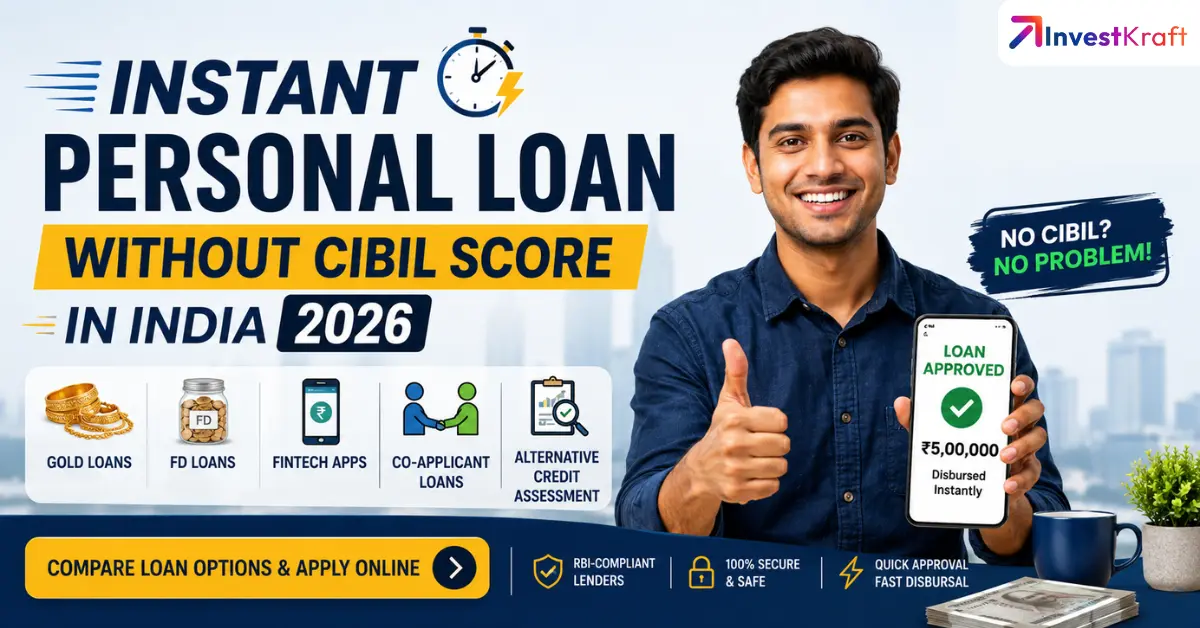
A personal loan backed by collateral - typically a Fixed Deposit, insurance policy, or shares. Offers lower interest rates than unsecured loans.
Interest: 9% to 12% - significantly lower
Approval: Easy, even for moderate CIBIL scores
Amount: Based on collateral value
Most common: Loan against FD (80% to 90% of FD value)
15. Flexi / Overdraft Personal Loan
One of the most financially intelligent personal loan structures - yet most borrowers do not know it exists.
MoneyTap, Fibe, and HDFC Bank (among others) offer a credit line instead of a fixed loan amount. You get a pre-sanctioned limit - say ₹3 lakh - but you only withdraw what you need. You pay interest only on the amount withdrawn, not the full limit.
Example: You have a ₹3 lakh flexi limit. You withdraw ₹80,000. You pay interest on ₹80,000 only - not ₹3 lakh. When you repay ₹30,000, the limit restores.
Best for: Business owners, freelancers, and anyone with variable, unpredictable cash needs. The structure is dramatically cheaper than a fixed-amount term loan for those who do not need the full limit immediately.
16. Pre-Approved Personal Loan
Many lenders offer interest rate concessions or pre-approved instant personal loans at lower interest rates to applicants with whom they have existing lending, deposit, or credit card relationships.
No application - the offer already exists based on your financial behaviour
Zero additional documentation for existing customers
Instant approval - sometimes disbursed in minutes
Best rates - banks want to retain good customers
Check for pre-approved offers: HDFC MobileBanking, ICICI iMobile, SBI YONO, Kotak app, Axis Mobile - look under "Loans" or “Offers.”
17. Top-Up Loan
If you already have an active personal loan and have been repaying it on time for 6 to 12+ months, your lender may offer a top-up - additional amount at the same or near-same interest rate, without fresh documentation.
Amount: Based on original loan amount and repayment history
Best for borrowers who need additional funds and want to avoid the hassle of a fresh loan application
Quick Reference: All Types at a Glance
Let us take a look at all the types of personal loans we read in this blog:
How to Choose the Right Type - A Practical Decision Framework
Ask yourself three questions:
Question 1: What is the money for? Specific purpose → Use the purpose-specific loan type for potentially lower rates and better terms. No specific purpose or multiple needs → Standard unsecured personal loan or flexi loan.
Question 2: How much do I need and for how long? Under ₹50,000, short term → Flexi or overdraft; fintech app. ₹1 to ₹10 lakh, medium term → Standard personal loan from bank/NBFC. Above ₹10 lakh → Pre-approved offer from existing bank first; then compare.
Question 3: What is my profile? Government/PSU employee → PSU bank scheme (SBI, PNB, BOB) first. Salaried at MNC → Private bank (HDFC, ICICI, Kotak) first. Self-employed → NBFC (Bajaj Finance, Moneyview, IDFC FIRST) first. Pensioner → SBI Pension Loan specifically.
You can visit InvestKraft to compare all types of personal loan offers from 15+ verified lenders simultaneously - one eligibility check, multiple real offers, no CIBIL impact.
Summary
Personal loans in India in 2026 are far more diverse than most borrowers realise. The right type can save you thousands in interest, speed up approval, and ensure your specific need is perfectly matched with the right product.
By Purpose: Medical (fastest), Wedding (highest amounts), Home Renovation (tax benefit), Debt Consolidation (interest saver), Travel (Forex card option), Education (flexible, fast).
By Profile: Salaried (lowest rates), Self-Employed (bank statement alternatives), Pensioner (dedicated products), Women (rate concessions), Teachers and Government (specialised schemes), NRI (co-applicant required).
By Structure: Unsecured (most common), Secured (lowest rate, FD-backed), Flexi (most cost-efficient for variable needs), Pre-Approved (fastest, best rate for existing customers), Top-Up (minimal docs for existing borrowers).
The personal loan market has grown to ₹12 lakh crore for a reason - it solves real problems. Know which type solves yours.
Frequently Asked Questions
How many types of personal loans are there in India?
There are broadly 15+ types categorised by purpose (medical, wedding, travel, etc.), by borrower profile (salaried, self-employed, pensioner, women), and by structure (unsecured, secured, flexi, pre-approved, top-up) - the right type depends on your specific need and financial profile.
What are the 4 types of loans?
The 4 broad loan categories in India are secured loans (home loan, gold loan, LAP), unsecured loans (personal loan, credit card), government scheme loans (Mudra, PMEGP), and revolving credit (credit card, overdraft) - personal loans fall primarily under the unsecured category.
Which type of personal loan is cheapest in India?
Secured personal loans against FD are cheapest (8% to 10%); pre-approved loans for existing bank customers are cheapest among unsecured options (9.98% to 11%); pensioner loans and government employee loans follow closely at 9.5% to 11%.
What are the types of personal loans in HDFC Bank?
HDFC Bank offers salaried personal loans, self-employed personal loans, Flexi Personal Loan (credit line), pre-approved instant personal loans for existing customers, and top-up loans for active borrowers - all available via HDFC's website or mobile banking app.
Which personal loan type is best for debt consolidation?
A standard unsecured personal loan from a bank at 10% to 14% per annum used to repay higher-interest credit card debt (36% to 42%) or multiple small loans - the interest saving alone typically pays for the loan's processing fee within the first 2 to 3 months.
Can I switch between types of personal loans after taking one?
You cannot change the loan type mid-tenure - but you can do a balance transfer to a new lender, which effectively allows you to restructure your loan terms; alternatively, you can take a top-up from your existing lender for additional needs at similar rates.
What is a flexi personal loan and is it better than a regular personal loan?
A flexi personal loan gives you a pre-approved credit limit that you draw from as needed, paying interest only on the amount used - it is significantly cheaper than a regular personal loan if you do not need the entire sanctioned amount immediately, making it ideal for variable or uncertain cash needs.
Sources
Paisabazaar - Personal Loan Interest Rates (June 2026): paisabazaar.com/personal-loan/interest-rates
ClearTax - Lowest Personal Loan Interest Rate in India 2026: cleartax.in/s/lowest-personal-loan-interest-rate
HDFC Bank - Types of Personal Loan: hdfc.bank.in/personal-loan/types-of-personal-loan
InvestKraft - Personal Loan Types and RBI-Approved Lenders: investkraft.com
Disclaimer: Interest rates are as of June 2026 and subject to change based on RBI policy and individual lender decisions. This article is for informational purposes only and does not constitute financial advice. Always verify current rates and eligibility with your chosen lender before applying.
Author: Diwakar Kumar Singh
Diwakar Kumar Singh is a BFSI specialist and finance writer with over 7 years of hands-on experience in financial research, content creation, and analysis.
A Gold Medalist in MBA (Marketing) from IMT, he combines deep analytical skills with practical insights gained from evaluating companies, IPOs, unlisted shares, financial ratios, and investment opportunities. Diwakar has personally analysed hundreds of financial instruments and market scenarios, which he uses to break down complex topics into clear, actionable advice.
He has authored numerous in-depth finance articles, published multiple books internationally, and contributed to research publications. His work focuses on helping everyday investors and readers make better-informed financial decisions through well-researched, evidence-based explanations that are always grounded in real-world application rather than theory alone.


 care@investkraft.com
 +91-9599071040
 +91-9797971876