EPFO 3.0 Digital Upgrade: Features, Benefits, and Its Impact on India's Banking & Financial
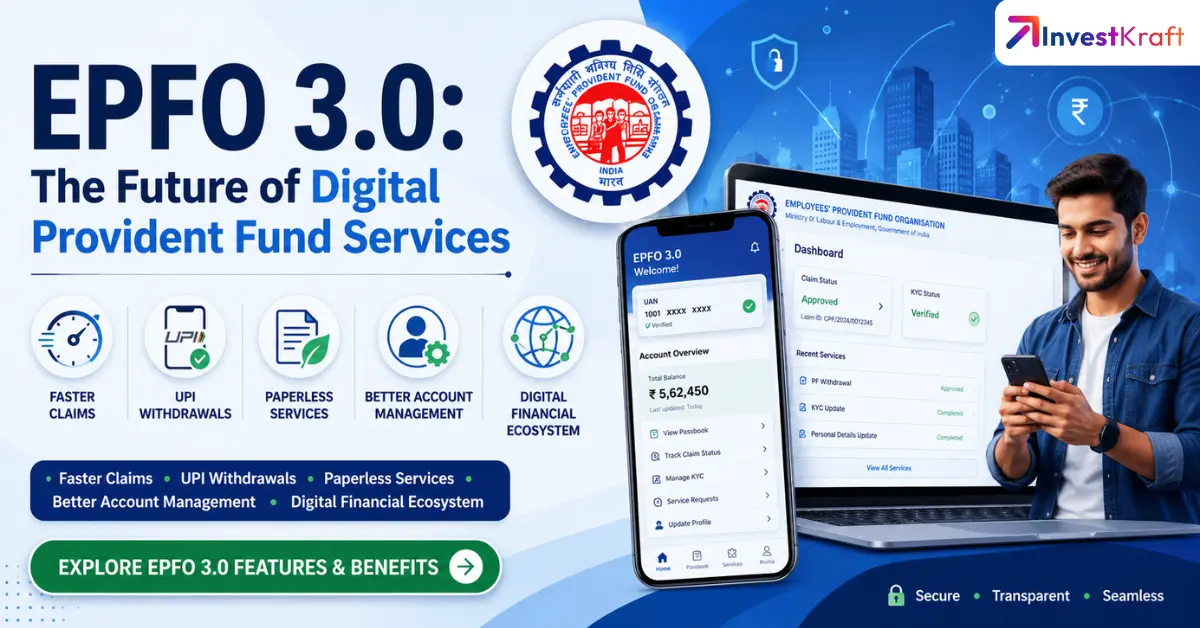
In this article, we explore the key features of EPFO 3.0, its benefits, and why it represents a major milestone in India's evolving digital financial infrastructure.
What is EPFO 3.0?
EPFO 3.0 is the next phase of the Employees' Provident Fund Organisation's digital transformation initiative. It is designed to make provident fund services faster, more transparent, and largely paperless through advanced technology and automation.
Key Features of EPFO 3.0
The following are the key features of EPFO 3.0:
- Faster PF claims: PF claims are now processed through an automated validation system. Beneficial during medical emergencies or urgent financial needs.
- Paperless PPF: Fully digital with minimal paperwork for easier online applications, digital verification, documentation and processing.
- UPI-Based Withdrawal Capability: Ongoing implementation of UPI with EPFO. You can receive PF withdrawals through UPI, saving a lot of time and effort.
- Simple Withdrawal Rules: Withdrawal rules are organised under broader categories as essential needs, housing requirements and special circumstances. This will help in faster claim processing.
- Self-Service Account Management: EPFO 3.0 gives subscribers more flexibility and control over their accounts, like updating personal details, tracking claims, managing KYC, checking account balances and initiating service requests.
- Digital KYC Process: Aadhar-linked authentication and a digital mechanism for quicker KYC.
- Mobile Friendly Experience: EPFO 3.0 gives a better mobile experience and an improved interface for easy and smooth usage.
How EPFO 3.0 Benefits Employees?
Following are the EPFO 3.0 benefits and advantages for employees:
- Faster access to provident fund savings
- Reduced paperwork and documentation
- Better transparency in claim status
- Improved account management
- Lower dependency on employer intervention
- Enhanced digital accessibility
- Greater convenience during emergencies
Impact of EPFO 3.0 on the BFSI Sector
The following are some of the most important impacts of EPFO 3.0 on the entire BFSI segment:
- Banking Sector: Banks will benefit from faster digital settlements, quicker fund transfers and better integration with government-backed financial systems.
- Fintech Industry: EPFO 3.0 can help fintech companies provide better personal finance services, wealth management, AI-driven financial insights and retirement planning schemes. We have discussed retirement planning later in this article.
- Insurance Sector: Insurers can design more personalised retirement and pension solutions, and customers can make more informed decisions regarding annuity plans, health insurance and long term financial security.
- Streamlined corporate payroll ecosystem
EPFO 3.0 and Retirement Planning
EPFO 3.0 can help in proactive retirement planning as follows:
- Better visibility into retirement savings
- Faster access during emergencies
- Improved account transparency
- Easier monitoring of contributions
Challenges and Considerations
Despite its potential, EPFO 3.0 will also face implementation challenges.
- Cybersecurity: Protecting user data and preventing privacy leaks will always be a point of concern.
- Digital Literacy: Many Indians still do not know how to use mobile devices and online services, as explaining self-service portals to them is still a challenge.
- Technology Integration: As EPFO 3.0 requires large scale migration to new systems, this will need proper coordination between employers, banks and government platforms to avoid any data mismatches.
Summary
EPFO 3.0 represents more than a technology upgrade. It signals the evolution of India's retirement savings system into a modern digital financial platform.
By introducing automation, paperless services, simplified processes, and stronger digital integration, the initiative can improve the experience of millions of subscribers while creating new opportunities for banks, fintech companies, insurers, and financial planners.
For the BFSI sector, EPFO 3.0 is an important step toward a more connected and efficient financial ecosystem where retirement planning, digital payments, and banking services increasingly work together.
As India's digital public infrastructure continues to evolve, reforms like EPFO 3.0 will play a crucial role in shaping the future of financial services.
Frequently Asked Questions
Is EPFO 3.0 officially launched?
The digital upgrade is being rolled out in phases, with various reforms and technology enhancements being introduced progressively.
What is the biggest benefit of EPFO 3.0?
Faster claim processing, reduced paperwork, improved transparency, and a more user-friendly digital experience are among its key advantages.
Will EPFO 3.0 support UPI withdrawals?
UPI-enabled withdrawal functionality has been proposed as part of the broader modernisation initiative and is expected to simplify fund access for eligible subscribers.
Does EPFO 3.0 affect PF interest rates?
No. The digital upgrade focuses on improving service delivery and account management rather than changing interest rates.
Why is EPFO 3.0 important for the BFSI sector?
The initiative strengthens digital finance by integrating retirement savings with modern banking infrastructure, encouraging fintech innovation, improving customer experience, and supporting India's broader digital financial ecosystem.
Author: Diwakar Kumar Singh
Diwakar Kumar Singh is a BFSI specialist and finance writer with over 7 years of hands-on experience in financial research, content creation, and analysis.

A Gold Medalist in MBA (Marketing) from IMT, he combines deep analytical skills with practical insights gained from evaluating companies, IPOs, unlisted shares, financial ratios, and investment opportunities. Diwakar has personally analysed hundreds of financial instruments and market scenarios, which he uses to break down complex topics into clear, actionable advice.
He has authored numerous in-depth finance articles, published multiple books internationally, and contributed to research publications. His work focuses on helping everyday investors and readers make better-informed financial decisions through well-researched, evidence-based explanations that are always grounded in real-world application rather than theory alone.


 care@investkraft.com
 +91-9599071040
 +91-9797971876










.webp)