You just got hospitalised. Your family is stressed.
The hospital reception desk asks: “Which TPA is on your health insurance card?”
You stare blankly.
Most health insurance policyholders in India have seen the three letters TPA on their insurance card, e-card, or policy document - and most have absolutely no idea what it means until the moment they actually need to file a claim.
That moment is the worst possible time to be figuring out the basics.
Here is everything you need to know about TPAs in health insurance - what they are, what they do, how they handle your cashless and reimbursement claims, what the latest IRDAI 2026 regulations change, and what to do when your TPA lets you down.
TPA Full Form and Definition
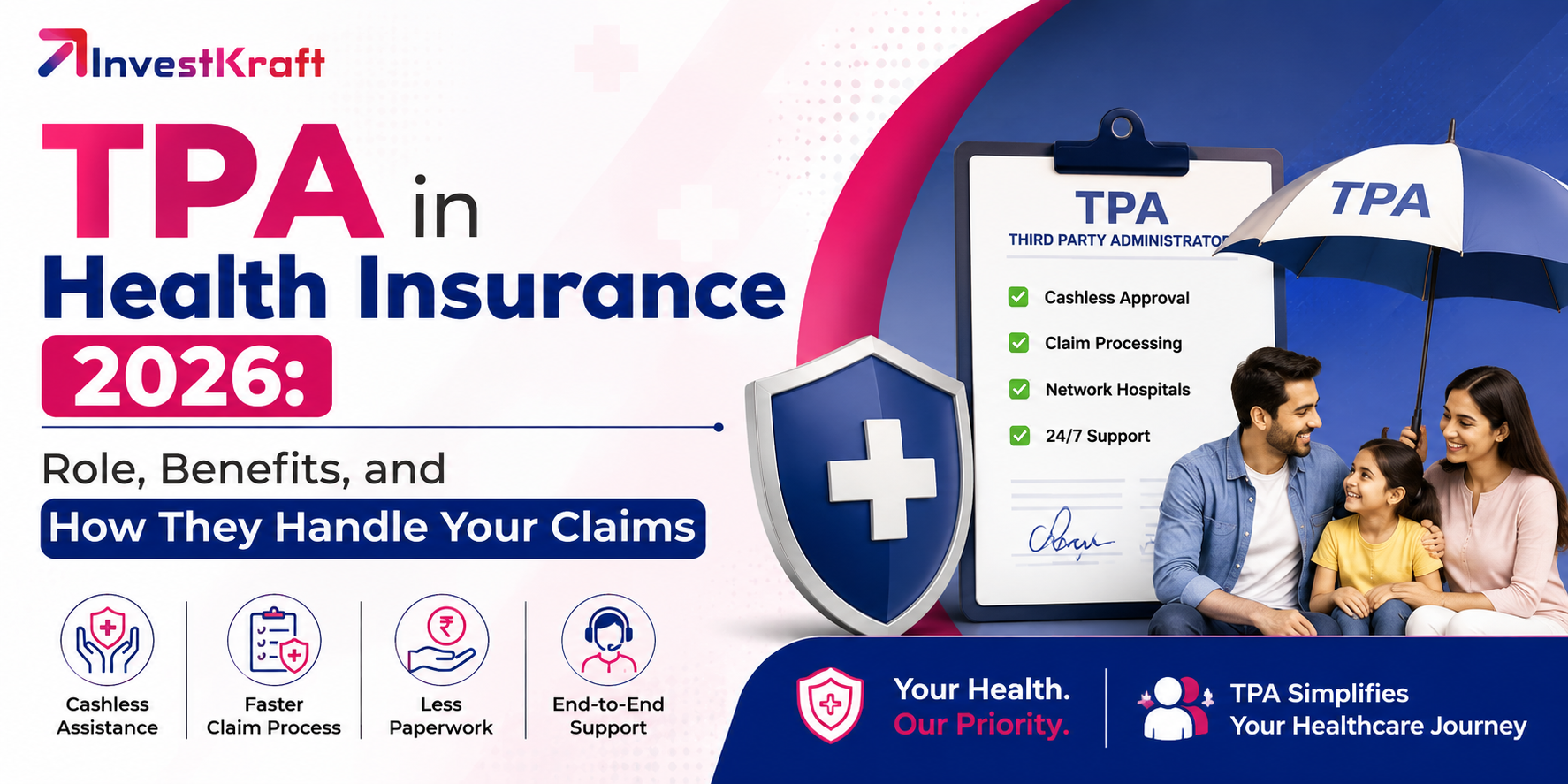
TPA full form in insurance is Third Party Administrator.
A TPA in insurance means a company registered with the IRDAI and hired by an insurer, for a fee as mentioned in the health services agreement, to provide health services like claims processing and cashless treatment facilitation at network hospitals. It acts as an intermediary between the insurer and policyholders.
A Third Party Administrator (TPA) is an IRDAI-certified firm that acts as an extended arm for insurers, catering to a number of tasks including claim processing, pre-insurance medical tests, and cashless hospitalisation.
In simpler terms: when you have a health insurance claim, the TPA is the operational engine that processes it. Your insurer sets the coverage terms and pays the money. The TPA handles the day-to-day execution - verifying your claim, coordinating with the hospital, and ensuring the right amount gets settled.
How TPAs Fit Into the Health Insurance Ecosystem
Think of the health insurance ecosystem as having four key players - and the TPA sits at the operational centre of it all.
You pay the premium and receive a health card (with TPA details) and coverage benefits.
Your insurer (Star Health, HDFC ERGO, Niva Bupa, etc.) underwrites the policy, sets the terms, and ultimately pays the claim amount.
The TPA receives your pre-authorisation request, verifies your policy, coordinates with the hospital, reviews bills, and processes the settlement - either cashless or reimbursement.
The hospital's insurance desk contacts the TPA for approval, submits bills, and receives payment directly (for cashless claims).
A health insurance TPA acts as a link between you and your insurance company to coordinate with hospitals, verify policy details, and facilitate claim approvals. This is particularly helpful during cashless hospitalisation, where the TPA makes sure your bills are settled directly with the least hassle.
Key Roles and Responsibilities of a TPA
Now, let us understand the key responsibilities of a TPA:
1. Issuing Health Cards and Unique ID Numbers
When you buy or renew a health insurance policy, the TPA issues your health card (physical or digital) with your unique policy identification number, insured member details, and the TPA's helpline number. This card is your first point of contact in any medical emergency.
TPAs handle documentation, check policy details, and make the claim process smooth. They are licensed by IRDAI, which means they are officially approved and regulated.
2. Building and Managing the Hospital Network
The cashless network hospitals listed on your health policy are empanelled and managed by the TPA. The TPA negotiates package rates with hospitals, verifies their infrastructure, and maintains the active network list that determines where you can receive cashless treatment.
3. Pre-Authorisation for Cashless Treatment
This is the TPA's most visible and critical function during hospitalisation. When you check into a network hospital, the hospital's insurance desk sends a pre-authorisation request to your TPA. The TPA reviews your policy terms, verifies the proposed treatment is covered, checks your remaining sum insured, and grants (or declines, with reasons) cashless approval - typically within 1 to 4 hours for planned admissions.
4. Claims Verification and Settlement
A TPA may render the following services to an insurer in connection with health insurance business: servicing of claims by way of pre-authorisation of cashless treatment or settlement of claims other than cashless claims or both, as per the underlying terms and conditions of the respective policy and within the framework of the guidelines issued by the insurers.
For reimbursement claims, the TPA reviews your submitted documents, verifies treatment necessity, checks policy exclusions, calculates the admissible amount, and sends the settlement recommendation to the insurer.
5. Pre-Insurance Medical Examinations
Before issuing a health policy, insurers sometimes require medical tests for older applicants. TPAs can facilitate the carrying out of pre-insurance medical examinations in connection with the underwriting of health insurance policies.
6. Record-Keeping and Data Management
TPAs maintain detailed records of all policies under their administration - claim history, hospitalisation records, policy details, and medical data. This data helps insurers in underwriting decisions and helps policyholders access their claim history easily.
7. 24×7 Helpline and Grievance Support
Every IRDAI-registered TPA must provide a 24-hour helpline. This is your first call during a medical emergency - the TPA helpline guides you to the nearest network hospital, initiates pre-authorisation, and answers coverage questions in real time.
TPA vs Insurance Company: The Key Difference
This is one of the most commonly confused distinctions in health insurance.
Function
Insurance Company
TPA
Underwrites and issues the policy
Yes
No
Sets coverage terms and exclusions
Yes
No
Actually pays the claim amount
Yes
No
Processes and verifies claims
Sometimes (in-house teams)
Yes (outsourced)
Issues health cards
Sometimes
Usually Yes
Manages hospital network
Jointly
Primarily Yes
24×7 helpline for claims
Sometimes
Yes
Handles pre-authorisation
No
Yes
Who actually approves or rejects your claim - the TPA or the insurer?
This is the single most important thing to understand. The TPA acts as an intermediary - it processes and makes a recommendation, but the insurer is the decision-making authority on final claim approval or rejection.
When your TPA rejects a cashless claim, it is typically implementing the insurer's coverage policy, not making an independent decision. This is why an escalation to the insurer's own grievance team - not just the TPA - is often more effective when you dispute a rejection.
TPA vs In-House Claims Team
Many large insurers like Star Health, Niva Bupa (formerly Max Bupa), and Care Health have moved toward managing claims through their own in-house teams - eliminating the TPA layer entirely for their policies.
Aspect
TPA Model
In-House Claims Team
Claim decision speed
Can be slower (extra coordination layer)
Often faster (direct access to insurer)
Accountability
Split between TPA and insurer
Single point - insurer
Hospital network
TPA manages
Insurer manages directly
Customer communication
Via TPA helpline
Direct with insurer
Common with
Public sector health plans, group policies
Private standalone health insurers
Neither model is inherently better - what matters is the responsiveness and claim settlement track record of your specific insurer-TPA combination.
The TPA Claims Process - From Emergency to Settlement
Cashless Claim Walkthrough
Step 1: You are admitted to a network hospital (planned or emergency).
Step 2: The hospital's insurance desk contacts the TPA with your health card details and diagnosis.
Step 3: TPA verifies your policy, sum insured, and coverage eligibility - typically within 1 to 4 hours for planned procedures, and within 1 to 2 hours for emergencies.
Step 4: TPA sends a pre-authorisation letter to the hospital specifying the approved amount and applicable terms.
Step 5: Treatment is provided. Hospital maintains records and bills in the approved format.
Step 6: At discharge, the hospital submits the final bill to the TPA.
Step 7: TPA reviews final bill, verifies against pre-authorisation, and processes payment directly to the hospital.
Step 8: You pay only the amount not covered - co-pay, deductibles, or expenses exceeding your sum insured.
For emergency admissions: Inform your TPA within 24 to 48 hours of admission (check your specific policy for the deadline - missing it can result in the claim being treated as reimbursement rather than cashless).
Reimbursement Claim Walkthrough:
This happens when you are treated at a non-network hospital, or when cashless was not available due to an emergency.
Step 1: Pay all hospital bills at discharge and collect original copies of everything.
Step 2: Submit complete documentation to your TPA - physically at their office, by courier, or via their online portal (most major TPAs now accept digital uploads).
Step 3: TPA processes the claim - typically 15 to 30 days for straightforward claims, potentially longer if additional documents are requested.
Step 4: TPA makes a settlement recommendation to the insurer. The insurer reviews and releases payment directly to your registered bank account.
Required documents - Do Not Leave the Hospital Without These
Discharge summary (signed by treating doctor)
All original bills - itemised, not just totals
Pharmacy bills with prescriptions Investigation/test reports with the doctor's order slip
Claim form (available on TPA's website or insurer's portal)
Identity proof (policy card + Aadhaar)
NEFT details for claim payment
Example:
Priya (age 34, Delhi) has a ₹5 lakh floater health policy with HDFC ERGO - TPA is Paramount Health Services.
She is admitted to a network hospital for an appendectomy. Total bill: ₹1,85,000.
The hospital sends a pre-auth request to Paramount. Paramount approves ₹1,70,000 (some consumables are excluded as per policy).
Priya pays ₹15,000 at discharge for the excluded items. Paramount settles ₹1,70,000 directly with the hospital.
Priya's out-of-pocket: ₹15,000. Insurance settled: ₹1,70,000. Process time: 45 minutes for initial approval, 2 hours for final settlement at discharge.
List of Major TPAs in India 2026
In India, 17 TPAs are currently registered with the IRDAI, according to the official IRDAI portal.
TPA Name
Known For
Insurer Partnerships
Medi Assist TPA
Largest TPA by volume
Multiple major insurers
Family Health Plan Limited (FHPL)
Strong in corporate health
PSU bank and group policies
Paramount Health Services
Good network hospital coverage
HDFC ERGO, others
Vipul Medcorp
Technology-forward
Multiple private insurers
East West Assist
NRI and travel health
Specialised segment
Raksha TPA
Mid-size, solid track record
Various general insurers
MD India Health Insurance TPA
Strong in Maharashtra/Western India
Regional focus
Safeway Insurance TPA
Public sector insurer focus
New India, Oriental
Health India TPA
Eastern India focus
Various
Genins India
Technology-enabled claims
Various
How to find your TPA: Look at your health insurance card - the TPA name and helpline number are printed on it. Alternatively, check your policy document or log into your insurer's portal.
Benefits of TPAs
The following are the benefits of TPA:
For You, the Policyholder
Cashless treatment at network hospitals without paying large amounts upfront - critical during medical emergencies when immediate liquidity is a challenge
24×7 helpline access with trained health insurance specialists who understand both medical and insurance terminology
Digital health cards and e-claim submission - increasingly standard across major TPAs
Pre-authorisation reduces disputes at discharge since the covered amount is pre-agreed
For Insurers
Specialised claims management without building an internal team for every geography
TPAs serve multiple insurers, achieving economies in hospital negotiations and claim processing infrastructure
Data management for underwriting - TPA claim records inform future premium pricing
For Employers (Group Health Plans)
TPAs manage the entire corporate health insurance programme - enrolment of new employees, issuance of health cards, claim processing for an entire workforce, and monthly MIS reports to HR teams Employees get dedicated TPA support without involving the HR department in individual claims
Can You Choose or Change Your TPA?
According to the new IRDAI rules, customers can select a TPA when purchasing or renewing their health insurance plan.
This is a significant change from the earlier system where policyholders had no say in TPA assignment. Now:
At the time of purchasing or renewing a policy, your insurer may offer a choice of empanelled TPAs You can express a preference for a TPA with a stronger hospital network in your city During renewal, you can request a TPA change if you have had poor service experience
Practical steps to request a TPA change
Contact your insurer's customer care with your policy number
State the specific reason for the request (poor service, limited network in your location, delayed claims)
The insurer processes the change - typically at the next renewal, though some insurers accommodate mid-policy changes in exceptional circumstances
Important: Changing your TPA does not change your coverage terms, premium, or policy conditions. Only the service provider changes.
What to Do If Your TPA Rejects Your Cashless Claim
Cashless rejection at the hospital desk is one of the most stressful moments in health insurance. Here is the correct sequence of actions:
Step 1: Ask the TPA for the rejection reason in writing - not verbally, in writing. This documents their reasoning and is essential for any appeal.
Step 2: Verify whether the rejection is on valid grounds (genuine exclusion in your policy) or on procedural grounds (technical error, wrong documents).
Step 3: For procedural issues, call the TPA's senior claims supervisor immediately. Many cashless rejections are overturned when the right person reviews the case.
Step 4: Escalate to your insurer's grievance cell - not the TPA - if the TPA is unresponsive. Every IRDAI-registered insurer has a mandatory grievance officer.
Step 5: In an emergency, proceed with treatment and switch to a reimbursement claim. Do not delay life-saving treatment waiting for a cashless resolution.
Step 6: File a complaint with the Insurance Ombudsman if unresolved within 30 days of insurer grievance escalation. The Ombudsman's decision is binding on the insurer.
Contact: Council for Insurance Ombudsmen at cioins.co.in - 17 offices across India covering all states.
Recent IRDAI Updates on TPAs - What Changed in 2026
In June 2026, IRDAI issued an Exposure Draft proposing amendments to the TPA Health Services Regulations, 2016, following the enactment of the Sabka Bima Sabki Raksha (Amendment of Insurance Laws) Act, 2025. The proposed amendments introduce a framework for perpetual registration of TPAs, replacing the earlier fixed-term certificate renewal system, subject to payment of annual fees and compliance with regulatory requirements.
What perpetual registration means for policyholders
TPAs previously operated on fixed-term registration certificates requiring periodic renewal, creating potential disruptions if a TPA's registration lapsed.
Perpetual registration provides more stability and continuity of service.
Other key 2026 proposals: The draft permits eligible TPAs to pursue equity listing subject to prescribed conditions - meaning some large TPAs may eventually list on stock exchanges, increasing transparency and accountability.
IRDAI accepted several suggestions, including clarifying that existing TPAs must apply to the Authority for renewal of their Certificate of Registration and receive a revised certificate under the new framework.
These changes, while technical, collectively signal IRDAI's intent to professionalise and stabilise the TPA ecosystem in India.
Summary
The TPA is the operational engine of your health insurance - the entity that answers your 3 AM emergency call, coordinates your cashless hospitalisation, verifies your bills, and processes your reimbursement claim.
Here is the complete recap:
TPA full form: Third Party Administrator - an IRDAI-licensed intermediary between you, your insurer, and your hospital.
Who has TPAs: All IRDAI-registered general and standalone health insurers may use TPAs, though some large private insurers now use in-house teams.
17 TPAs are currently registered with IRDAI as of July 2026, down from 30+ as the sector consolidates.
Key TPA functions: Health card issuance, hospital network management, cashless pre-authorisation (1 to 4 hours), reimbursement claim processing (15 to 30 days), 24×7 helpline.
TPA vs Insurer: TPA processes claims; insurer approves them and pays. Disputes should be escalated to the insurer's grievance team, not just the TPA.
Your rights (2026): You can now select or request a TPA change at renewal under new IRDAI rules.
If rejected: Get the rejection in writing, escalate to the insurer's grievance officer, and approach the Insurance Ombudsman if needed within 30 days.
2026 regulatory update: IRDAI's proposed amendment introduces perpetual TPA registration and allows TPA equity listing, improving stability and transparency.
Frequently Asked Questions
Q1. What is a TPA in health insurance and why is it needed?
A TPA is a company registered with IRDAI and hired by an insurer to provide health services like claims processing and cashless treatment facilitation at network hospitals; it acts as an intermediary between the insurer and policyholders.
Q2. What is the full form of TPA in insurance?
TPA stands for Third Party Administrator - a regulated entity that manages the operational side of health insurance claims on behalf of insurance companies.
Q3. Does a TPA approve or reject health insurance claims?
The TPA verifies eligibility and makes a settlement recommendation; the insurer is the ultimate decision-making authority on claim approval or rejection. TPA rejection should be escalated to the insurer's grievance team if you believe it is wrong.
Q4. How does a TPA help in cashless claims?
The TPA acts as a link between you and your insurance company to coordinate with hospitals, verify policy details, and facilitate cashless claim approvals - making sure your bills are settled directly with the least hassle.
Q5. Can I change my health insurance TPA?
Yes - under new IRDAI rules, customers can select a TPA when purchasing or renewing their health insurance plan; to change mid-policy, contact your insurer's customer care with the reason for the request.
Q6. Who settles health insurance claims - the insurer or TPA?
The TPA processes the claim and recommends the settlement amount; the insurer reviews and releases the actual payment - both are involved, but financial responsibility lies with the insurer.
Q7. Do I have to pay any fee for TPA services?
No - TPA services are paid for by the insurer from the premium you pay; you do not pay the TPA separately for claim processing or helpline access.
Q8. What if my TPA rejects my cashless claim at the hospital?
Get the rejection reason in writing, call the TPA's senior claims supervisor immediately, escalate to your insurer's grievance officer if unresolved, and in a medical emergency, proceed with treatment and file a reimbursement claim - do not delay treatment waiting for cashless resolution.
Q9. How many TPAs are registered with IRDAI in India?
As of July 2026, 17 TPAs are currently registered with the IRDAI according to the official IRDAI portal.
Q10. What is the latest IRDAI update on TPAs in 2026?
IRDAI issued a June 2026 Exposure Draft proposing perpetual registration for TPAs under the Sabka Bima Sabki Raksha Act 2025 framework, replacing fixed-term certificate renewal and permitting eligible TPAs to pursue equity listing subject to prescribed conditions.
Government of India / Financial Services - IRDAI TPA Health Services Regulations 2016 (Official Document): financialservices.gov.in
TaxGuru - IRDAI Proposes Perpetual Registration for TPAs Under Draft Amendment Regulations (June 20, 2026): taxguru.in
IRDAI Official - TPA List and Regulations: irdai.gov.in/tpa
IRDAI Policyholder Portal - Third Party Administrators Explained: policyholder.gov.in/third-party-administrators
Manipal Cigna - Third Party Administrator in Health Insurance: manipalcigna.com/blog/third-party-administrator-in-health-insurance
Bajaj General Insurance - Role of TPA in Health Insurance: bajajgeneralinsurance.com/blog/health-insurance-articles/role-of-tpa-in-health-insurance
Disclaimer: TPA details, IRDAI regulations, and claim timelines mentioned in this article are as of July 2026 and subject to change. The proposed IRDAI TPA Amendment Regulations 2026 are in draft stage - final rules may differ. Always verify your specific policy terms with your insurer and TPA. This article is for informational purposes only.
Author: Diwakar Kumar Singh
Diwakar Kumar Singh is a BFSI specialist and finance writer with over 7 years of hands-on experience in financial research, content creation, and analysis.
A Gold Medalist in MBA (Marketing) from IMT, he combines deep analytical skills with practical insights gained from evaluating companies, IPOs, unlisted shares, financial ratios, and investment opportunities. Diwakar has personally analysed hundreds of financial instruments and market scenarios, which he uses to break down complex topics into clear, actionable advice.
He has authored numerous in-depth finance articles, published multiple books internationally, and contributed to research publications. His work focuses on helping everyday investors and readers make better-informed financial decisions through well-researched, evidence-based explanations that are always grounded in real-world application rather than theory alone.


 care@investkraft.com
 +91-9599071040
 +91-9797971876