Every risk-averse investor loves the Fixed Deposit. Guaranteed rate. No market risk. No surprises. You put in ₹1 lakh, you know exactly what you'll get back on maturity day.
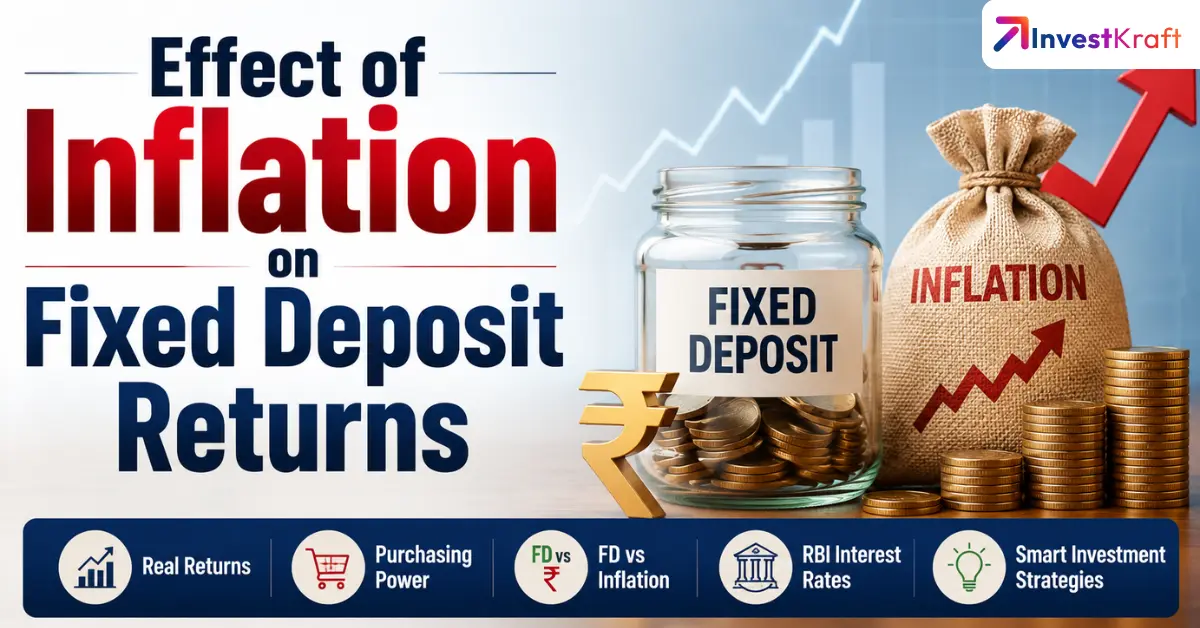
But here's the uncomfortable truth almost nobody explains clearly: the number on your FD certificate is not the number that matters. What matters is what that money can actually buy you when the FD matures - and that depends entirely on inflation.
If inflation runs higher than your FD rate, you have not grown your wealth. You have quietly lost it, even while earning "interest".
Here is everything you need to know about how inflation actually affects your FD, with real numbers.
What Is "Real Return" and Why It's the Only Number That Matters
A Fixed Deposit's nominal return is the interest rate printed on your certificate - the number the bank advertises. It's fixed, guaranteed, and never changes once you have locked in your tenure.
Your real return is a different story entirely. It's calculated as:
Real Return=Nominal FD Rate−Inflation Rate
This is the number that tells you whether your money is actually growing in terms of what it can buy - groceries, fuel, school fees, rent - not just growing in terms of digits in a bank statement
In other words, you can earn interest every single year and still end up poorer in real terms, if inflation outpaces that interest consistently.
How Inflation Quietly Erodes Your FD
These are the following way on how inflation destroys your gains:
Reduced Purchasing Power
As prices for everyday goods and services rise, the same rupee amount buys you less than it used to. Your FD balance might look larger at maturity, but if prices have risen faster, you are not actually wealthier - you are standing still or falling behind
Lower Real Returns in Practice
Here's the calculation that matters most:
FD rate: 6% | Inflation: 4% → Real return: ~2% (you are ahead, but modestly)
FD rate: 5% | Inflation: 7% → Real return: ~-2% (you are losing purchasing power despite "earning" interest)
This is the core danger of treating FDs as a pure wealth-building tool rather than a capital-preservation tool.
The RBI Connection
When inflation runs high, the Reserve Bank of India typically raises the repo rate to cool it down. Banks often respond by raising FD interest rates in turn.
But if you have already locked into a 3-year FD at a lower rate before this happens, you don't benefit from the new higher rates - you are stuck earning the old rate while prices around you keep climbing.
Example of Return Scenarios - See the Numbers for Yourself
The following example will help you understand the return scenarios for various market conditions:
FD Interest Rate
Inflation Rate
Real Return
Verdict
6%
4%
~2%
Positive - modest wealth growth
5%
7%
~-2%
Negative - wealth erosion
7%
6%
~1%
Thin margin - barely beating inflation
8%
5.00%
~3%
Healthier real return
6.50%
6.50%
~0%
Break-even - money stagnant in real terms
The takeaway is simple: the FD rate alone tells you nothing. It's the gap between that rate and inflation that decides whether your money actually grows.
4 Strategies to Protect Your FD Returns From Inflation
The following are the 4 most important strategies to protect your FD from inflation:
1. Use Staggered or Laddered FDs
Instead of locking your entire corpus into one FD at one rate, split it across multiple FDs with different tenures. As each one matures, you can reinvest at whatever the prevailing rate is - capturing rate hikes instead of being stuck with old, lower rates.
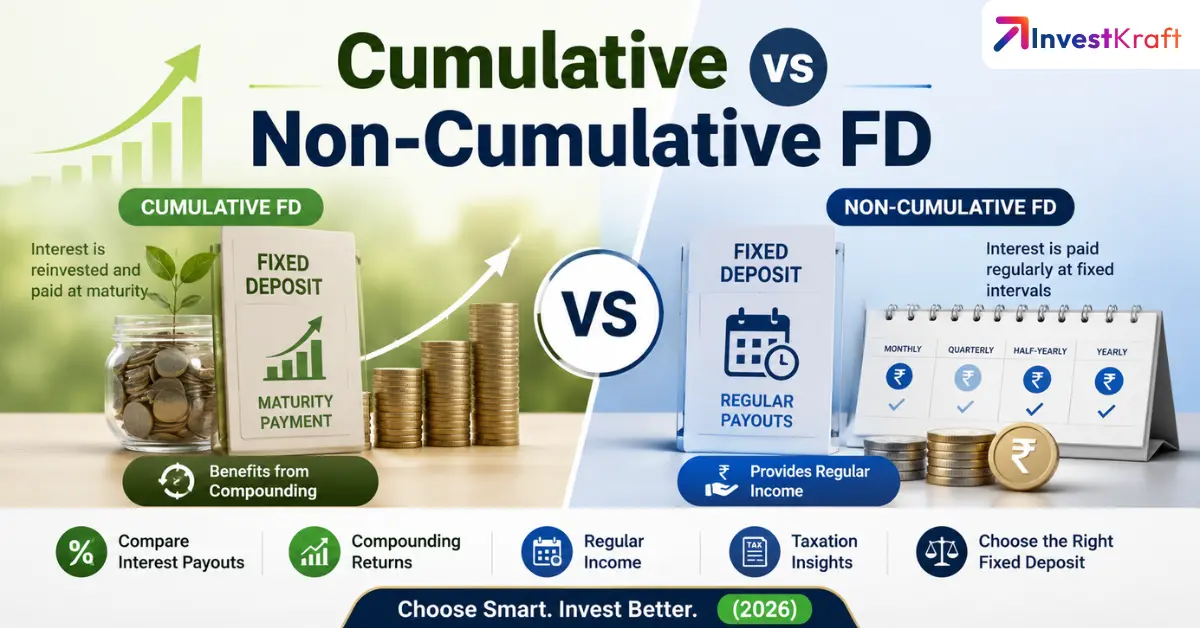
2. Opt for Cumulative FDs
Cumulative FDs compound your interest instead of paying it out periodically, which accelerates the growth of your total corpus and helps partially offset inflation's drag over longer tenures.
3. Diversify Beyond FDs
FDs alone rarely outpace inflation consistently over the long run. Adding equities, real estate, or inflation-indexed bonds to your portfolio gives you better protection because these asset classes have historically grown faster than inflation over extended periods.
4. Track Inflation and RBI Policy Before Locking In
Since inflation moves in cycles and RBI rate decisions often follow it, timing your FD tenure choice around expected inflation trends can help you avoid locking into a low rate right before inflation rises.
Can FDs Actually Beat Inflation in India?
Sometimes - but not reliably.
During periods of moderate inflation (4% to 5%) paired with decent FD rates (7% or higher), FDs can deliver a genuinely positive real return.
But during inflation spikes, FD rates typically lag behind, and by the time banks raise rates, your existing locked-in deposits are already losing ground.
This is exactly why most financial planners recommend FDs as a safety and stability tool - not as your primary engine for long-term wealth creation.
Inflation is the silent variable that decides whether your FD is truly building wealth or simply preserving it. Here is the complete recap:
Real return equals nominal FD rate minus inflation - this single formula tells you the truth.
A 6% FD with 4% inflation gives roughly 2% real growth - modest but positive. A 5% FD with 7% inflation turns negative - your money is actually losing value.
RBI rate hikes during high inflation eventually push FD rates up - but usually with a lag.
Laddered FDs let you reinvest at better rates as they emerge.
Cumulative FDs compound your way to slightly better long-term growth.
Diversification into equities, real estate, or inflation-indexed bonds is essential for genuine long-term protection.
The right approach: use FDs for safety and short- to medium-term goals, but don't expect them to single-handedly outrun inflation over 10+ years.
Combine them with growth assets for real wealth creation.
Frequently Asked Questions
What is the formula for real FD return?
Real return equals your FD's nominal interest rate minus the current inflation rate - for example, a 6% FD with 4% inflation gives approximately a 2% real return.
Can my FD returns actually go negative due to inflation?
Yes - if inflation exceeds your FD's interest rate, your real return becomes negative, meaning your money loses purchasing power even though the nominal balance on your statement keeps growing.
Do FD interest rates rise automatically when inflation rises?
Not automatically or immediately - but the RBI typically raises the repo rate during high inflation, which often prompts banks to increase FD rates over time, though existing locked-in FDs don't benefit until they mature.
Are cumulative FDs better for beating inflation than non-cumulative FDs?
Cumulative FDs help slightly by compounding interest and accelerating corpus growth, but they cannot fully offset high inflation on their own - they're a partial solution, not a complete one.
Should I stop investing in FDs because of inflation risk?
No - FDs remain valuable for safety, liquidity, and short-to-medium-term goals; the key is not relying on them alone for long-term wealth creation and instead diversifying into equities, real estate, or inflation-indexed bonds.
What is a laddered FD strategy and how does it help against inflation?
It means splitting your investment across FDs with staggered maturities so you can reinvest at potentially higher rates as each one matures, rather than locking your entire corpus at a single rate for a long period.
How do I quickly check if my FD is beating inflation right now?
Simply subtract the current inflation rate from your FD's interest rate - a positive result means you are ahead, a negative result means your real wealth is shrinking despite earning interest.
Sources
IndusInd Bank - Understanding How Inflation Affects the Real Returns on Fixed Deposits: indusind.bank.in
Bajaj Finserv - How Inflation Affects Fixed Deposit: bajajfinserv.in/investments/how-inflation-affects-fixed-deposit
BankBazaar - How Inflation Affects Fixed Deposit: bankbazaar.com/fixed-deposit/how-inflation-affects-fixed-deposit.html
Mahindra Finance - Understanding the Impacts of Inflation on Fixed Deposits: mahindrafinance.com
Disclaimer: Inflation rates, FD interest rates, and RBI monetary policy decisions are subject to change and vary by tenure, issuer, and economic conditions. The figures and scenarios in this article are illustrative and for informational purposes only, and do not constitute financial advice. Always verify current rates and consult a qualified financial advisor before making investment decisions.
Author: Diwakar Kumar Singh
Diwakar Kumar Singh is a BFSI specialist and finance writer with over 7 years of hands-on experience in financial research, content creation, and analysis.
A Gold Medalist in MBA (Marketing) from IMT, he combines deep analytical skills with practical insights gained from evaluating companies, IPOs, unlisted shares, financial ratios, and investment opportunities. Diwakar has personally analysed hundreds of financial instruments and market scenarios, which he uses to break down complex topics into clear, actionable advice.
He has authored numerous in-depth finance articles, published multiple books internationally, and contributed to research publications. His work focuses on helping everyday investors and readers make better-informed financial decisions through well-researched, evidence-based explanations that are always grounded in real-world application rather than theory alone.


 care@investkraft.com
 +91-9599071040
 +91-9797971876