Loan Default in India: What Legal Actions Can Banks Take Against Defaulters?
Updated: Dec 13th 2025
Loan

When you take a loan, it is considered a serious financial commitment, and by law, you have to repay back as per the law and guidelines. But, in case of unavoidable emergencies, you might not be able to repay the loan. In this article, we will explain everything about loan defaults, actions taken by lenders in a step-by-step manner, and what the laws are about loan defaults. So, stay with us till the very end to learn about loan defaults in India.
What Happens When You Do Not Pay EMIs on Time?
Well, immediately nothing significant happens, but if you repeatedly miss the payments, then it is going to be a big problem for you. Let us see what the issues are that you may face:
A Sharp Decline in Credit Score
- Your repayment behaviour is reported to credit bureaus like CIBIL, TransUnion, or Experian by lenders.
- A single missed EMI can reduce your credit score by 50–100 points, depending on your repayment history.
- If you are a repeat offender, your credit score will fall below 600, and you will be labelled as a high-risk borrower.
- High-risk borrowers do not get loans approved easily, and even if they get it approved, the interest rates are shockingly high.
- The chances of job prospects are also reduced for high-risk borrowers.
Persistent Notifications
- After missing the first or second payment, you will be getting continuous messages, calls and reminders for repayments.
- However, please note that the RBI has clearly mentioned that these notifications have to be professional and not harassing in any way.
Legal Action by Lenders
- If payments remain unpaid for 90 to 180 days, lenders can escalate the matter legally.
- Under various chapters and clauses of the Bharatiya Nyaya Sanhita, you can be booked for cheating, fraudulent activity and various other forms of aggravated cheating.
- Once you are booked, the problems will multiply, and you may face criminal charges as well.
Rising Financial Burden
- Once you start paying late or skipping payments, you will be penalised with higher interest rates and other financial penalties.
- This will increase your financial pressure and thus can affect your mental health as well.
Encashment of Post-Dated Cheques
- For higher loan amounts, you are usually asked to submit post-dated cheques.
- In case of loan defaults, the lender will present your post-dated cheques after issuing a notice.
- Those cheques, if they get bounced, will be considered a criminal charge with fines up to twice the cheque amount or imprisonment of up to two years.
Can You Go to Jail for Defaulting on a Personal Loan for 10 Years?
Now, this is a question which we have been asked multiple times. Please understand that loan default is primarily a civil matter and not a criminal matter by usual standards. However, the exceptions are there, and it may lead to criminal charges. The following are the exceptions:
- Willful Default: If it is proved by the lender that you have avoided payments despite having funds, then criminal charges could apply.
- Cheque Bounce: A bounced cheque can lead to prosecution, though cases older than 10 years may fall under the statute of limitations.
Please note that after 7 to 10 years, lenders just write off bad debts, and credit bureaus stop reflecting them on your report. However, unresolved legal issues may continue even after the said duration.
Steps You Can Take if Unable to Pay EMIs
If there is an emergency and you have genuinely been unable to repay the EMIs, then the following are the steps that you can take:
Identify the Reason for Default
- Start by honestly identifying the reason behind your missed or delayed EMI payments. It can be any personal or financial issue.
- We recommend that you write down your financials to understand the root cause.
- Once the root cause is acknowledged, a solution can be figured out.
Talk to Your Lender Immediately
- Do not ignore your failure to repay under any circumstances.
- Once missed, immediately contact your lender and state the reason for failure.
- Many lenders provide options for flexible repayment options that can help you.
Request for Loan Restructuring
- You can ask your lender to restructure your loan as per your current financial situation.
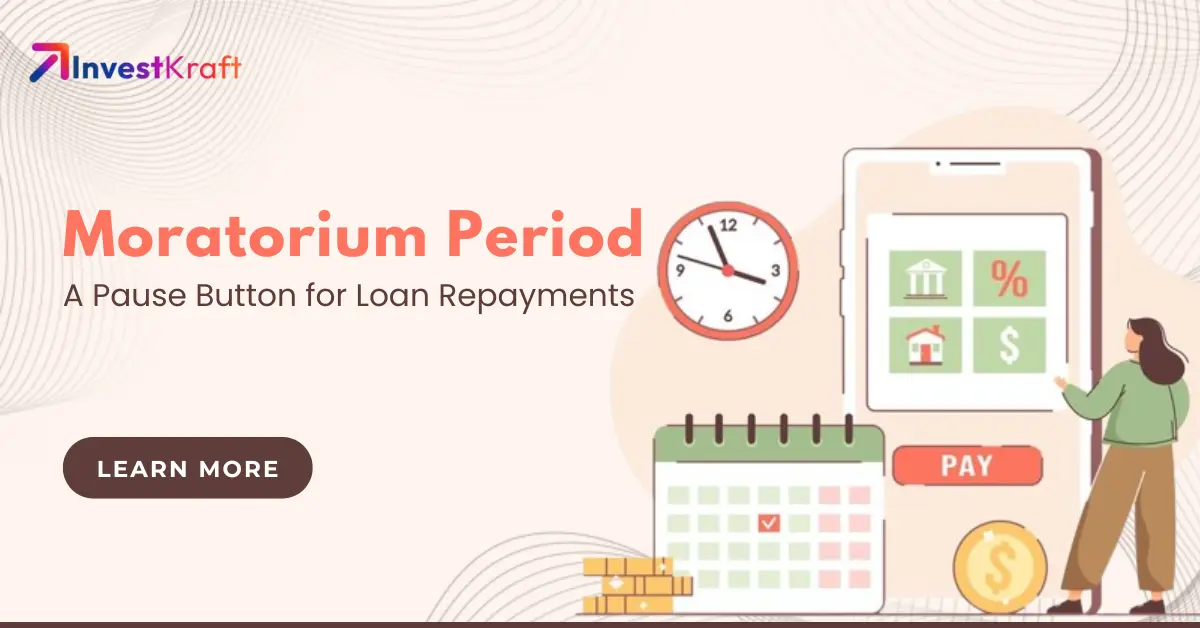
- Restructuring includes extending the loan tenure so that your EMIs can be reduced or you can get a moratorium period (a period during which you do not have to pay any EMIs, but interest will continue to accrue)
Negotiate for Lower EMIs or Partial Payment
- You can always negotiate for a lower EMI or request to pay only a percentage of your total due.
- If your issue is genuine, banks will consider it.
Consider Loan Refinancing or Balance Transfer
- You can consider refinancing the loan by taking a lower-interest loan from another lender. This is also called a loan balance transfer and can help reduce the EMI burden.
- However, make sure you read and understand all the associated terms and conditions properly.
Prioritise and Plan Your Finances
- Analyse your monthly expenses, income and other financial obligations using an app or a diary.
- Based on that analysis, create a new plan on how to manage your EMIs, by cutting all unnecessary expenses, setting aside priorities, essentials and emergency funds.
Take Help from a Credit Counsellor
- You can also consider approaching a credit counselling agency.
- These professionals can help you understand your options and negotiate on your behalf with the lender.
- However, they will charge some fees for their service.
Consider Bankruptcy (Last Resort)
- If your loan default has reached the legal stage, and you genuinely have no means to repay the loan (no income, no assets), you can file for insolvency or bankruptcy under the Insolvency and Bankruptcy Code (IBC).
- However, this should be the absolute last resort as it has long-term financial and legal consequences.
Loan Recovery Process for Personal Loan Default in India
In India, there is a structured legal process for personal loan default in India. Let us understand from the following steps:
- Loan Agreement Review: Lenders check the clauses as per the agreement, like late fees, interest hikes, or recovery terms.
- Issuance of Formal Notices: Formal notices are sent, giving 90 to 180 days to settle the dues.
- Debt Collection / Recovery Agents: Lenders will forward your case to the in-house collections team or third-party agencies to pressurise or negotiate collection from you. Please note that all recovery notifications have to comply with the RBI’s Fair Practices Code.
- Court Action: If all of the above methods fail, then lenders file a civil suit. A favourable judgment may result in asset seizure or salary garnishment.
Rights of Loan Defaulters in India as per the RBI
Please note that even as a defaulter, you have certain legal rights safeguarded by the RBI. The following are the rights:
- Right to Adequate Notice: Lenders must report defaults accurately and have to give borrowers 30 days to rectify errors.
- Right to Fair Valuation: If your assets are seized, you are entitled to a fair market valuation and notification.
- Right to Surplus Proceeds: If seized assets are of more value than the debt, then you are entitled to the excess.
- Right to Respond: You can contest recovery notices during the stipulated period.
- Right to Dignity: Harassment or coercion by recovery agents is illegal under RBI’s Fair Practices Code.
Conclusion
Not repaying your EMIs is considered a serious civil offence and can have a severe impact on your credit score as well as creditworthiness. However, if you have not been able to repay your loan, then there are standard and legal actions that your lender can take, which include the issuance of notices to court action. Whatever action chosen by the lender has to be fully compliant with RBI guidelines, as even if you are a defaulter, you have legal rights and protection against any sort of abuse or harassment. Solutions exist if you do not ignore your financial condition and discuss upfront with your lender regarding your genuine financial condition.
Frequently Asked Questions
What should I do if I can’t pay my EMI on time?
If you are unable to pay your EMI, contact your lender immediately. Explain your situation and request a temporary relief, loan restructuring, or revised EMI schedule. Avoid ignoring the issue, as delays can harm your credit score and lead to legal action.
Will my credit score be affected if I miss an EMI?
Yes, missing even a single EMI can reduce your credit score by 50 to 100 points. Repeated defaults can significantly damage your credit profile, making it difficult to get loans or credit cards in the future.
Can I go to jail for not paying a personal loan?
Loan default is generally a civil matter, not a criminal one. However, if it involves willful default, cheque bounce, or fraud, criminal charges may apply. It is always best to resolve issues early with your lender.
What is loan restructuring, and how can it help?
Loan restructuring allows you to modify the terms of your loan, like increasing the loan tenure and thus reducing EMI. You need to formally request this from your lender, and approval is based on their internal policy and your repayment history.
Can I file for bankruptcy if I can’t repay my loan?
Yes, if you have no means to repay and a legal recovery has started, you may declare bankruptcy under the Insolvency and Bankruptcy Code (IBC). However, it has serious legal and financial consequences and should only be considered as a last resort.
Author: Diwakar Kumar Singh
Diwakar Kumar Singh is a BFSI specialist and finance writer with over 7 years of hands-on experience in financial research, content creation, and analysis.

A Gold Medalist in MBA (Marketing) from IMT, he combines deep analytical skills with practical insights gained from evaluating companies, IPOs, unlisted shares, financial ratios, and investment opportunities. Diwakar has personally analysed hundreds of financial instruments and market scenarios, which he uses to break down complex topics into clear, actionable advice.
He has authored numerous in-depth finance articles, published multiple books internationally, and contributed to research publications. His work focuses on helping everyday investors and readers make better-informed financial decisions through well-researched, evidence-based explanations that are always grounded in real-world application rather than theory alone.


 care@investkraft.com
 +91-9599071040
 +91-9797971876