Did you know that India has over 6.3 crore MSMEs - and yet, lack of access to credit remains the single biggest reason many of them never reach their full potential?
Here is something even more striking: Under the Pradhan Mantri Mudra Yojana (PMMY) alone, over 52 crore loans worth more than ₹32 lakh crore have been disbursed since 2015.
That is not a typing mistake!
Fifty-two crore loans - to shopkeepers, small manufacturers, food stall owners, and first-time entrepreneurs across the country.
The Indian government has built an entire ecosystem of schemes designed specifically so that the lack of money does not stop a good idea from becoming a great business. Collateral-free loans, interest subsidies, credit guarantees, special schemes for women and SC/ST entrepreneurs - it is all out there. Most people just do not know where to look.
This guide will fix this problem.
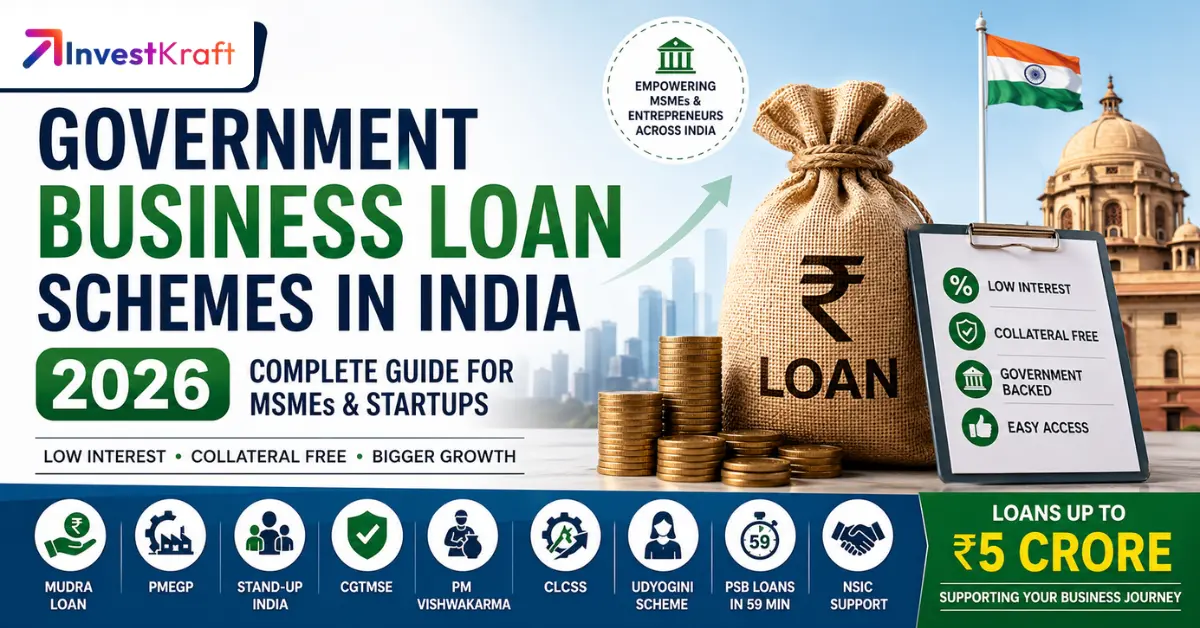
Whether you are starting your first business or looking to expand an existing one, here is everything you need to know about the top government business loan schemes in India in 2026.
Why Government Business Loans? A Quick Look at the Numbers
Before diving into the schemes, here is why these loans deserve serious attention:
₹5,02,782 crore disbursed under PMMY in FY 2024-25 alone
Up to 35% subsidy available under PMEGP for rural entrepreneurs
Zero collateral required under CGTMSE for loans up to ₹5 crore
5% interest rate - heavily subsidised - under PM Vishwakarma Yojana India's 3,000+ new startups per year are projected to generate over 2.5 lakh jobs in the coming years
Affordable credit changes lives. Let us look at the best ways to access it.
Quick Comparison: Top Government Business Loan Schemes in India 2026
The following table shows the top government business loan schemes in 2026:
Scheme
Max Loan Amount
Collateral
Key Benefit
Best For
PMMY (Mudra)
₹20 lakh
None
Interest subvention on Shishu
Micro and small businesses
PMEGP
₹50 lakh
None
Up to 35% subsidy
New enterprises
Stand-Up India
₹1 crore
None
Composite loan
Women, SC/ST borrowers
CGTMSE
₹5 crore
None
Credit guarantee
New and existing MSEs
PM Vishwakarma
₹3 lakh
None
5% interest + toolkit
Artisans and craftspeople
CLCSS
Project based
NA
15% capital subsidy
Technology upgradation
Udyogini Scheme
₹15 lakh
Varies
Up to 50% subsidy
Women entrepreneurs
PSB Loans in 59 Min
₹5 crore
Varies
Approval in 59 minutes
MSMEs needing fast credit
NSIC Support
As per need
NA
Raw material and marketing
Small manufacturers
Now, let us understand them one by one.
1. Pradhan Mantri Mudra Yojana (PMMY) - The Flagship Scheme
Best for: New startups, small traders, service providers, micro enterprises
If there is one scheme every small business owner in India should know, it is PMMY. Launched in April 2015, Mudra loans have become the go-to financial lifeline for crores of entrepreneurs.
Big Update for 2026: As announced in the Union Budget 2024-25, the Mudra loan limit has been enhanced from ₹10 lakh to ₹20 lakh, with a new category called Tarun Plus added specifically for borrowers who have already repaid a Tarun loan.
Loan Categories Under PMMY
Category
Loan Amount
Who It Is For
Shishu
Up to ₹50,000
First-time entrepreneurs, early-stage micro units
Kishore
₹50,001 to ₹5 lakh
Growing businesses needing expansion capital
Tarun
₹5 lakh to ₹10 lakh
Established micro-enterprises scaling up
Tarun Plus
₹10 lakh to ₹20 lakh
Entrepreneurs who have repaid their Tarun loan
Key Features: Zero collateral for all Mudra loans. Available through banks, NBFCs, small finance banks, and MFIs. Covers manufacturing, trading, services, and allied agricultural activities 2% interest subvention for prompt repayment of Shishu loans. Credit guarantee covered under the Credit Guarantee Fund for Micro Units (CGFMU)
Eligibility: Any Indian citizen aged 18 to 65 years, running or planning to start a non-farm, non-corporate small or micro business. No prior credit history required
2. Prime Minister's Employment Generation Programme (PMEGP)
Best for: New entrepreneurs in rural and urban areas, especially in manufacturing and food processing
PMEGP is one of the most powerful schemes for first-generation entrepreneurs because it combines a bank loan with a direct government subsidy - meaning you do not have to repay a portion of your loan at all.
Administered by the Khadi and Village Industries Commission (KVIC), this scheme creates self-employment opportunities for individuals who want to set up micro-enterprises in the non-farm sector.
Subsidy Structure
Category of Beneficiary
Urban Areas
Rural Areas
General Category
15%
25%
Special Category (SC/ST, OBC, Women, Minorities, Ex-servicemen, differently-abled)
25%
35%
Loan Limits Manufacturing sector: Project cost up to ₹50 lakh Service and trading sector: Project cost up to ₹20 lakh Own contribution: 10% for general category, 5% for special categories Bank finances 90 to 95% of the project cost; subsidy is adjusted from this.
Eligibility: Any individual above 18 years of age. For projects above ₹10 lakh in manufacturing or ₹5 lakh in services, a Class VIII pass is required. Only for new projects - existing businesses or those already availing government subsidies are not eligible. Only one person per family can apply.
How to Apply: Apply online at the KVIC Portal - the entire process is digital.
3. Stand-Up India Scheme
Best for: Women entrepreneurs and SC/ST business owners starting greenfield ventures
Stand-Up India is a targeted scheme with a clear social purpose to ensure that at least one woman borrower and at least one SC/ST borrower per bank branch gets access to a substantial business loan.
This scheme is particularly powerful because it offers a composite loan - covering both term loan for capital expenditure and working capital - in a single facility.
Key Details
Feature
Detail
Loan Amount
₹10 lakh to ₹1 crore
Type
Composite loan (term + working capital)
Eligible Sectors
Manufacturing, services, trading
Target
At least 1 woman + 1 SC/ST per bank branch
Nature
Greenfield enterprise only
Eligibility: SC/ST or women entrepreneurs aged 18 and above. For non-individual enterprises, at least 51% shareholding must be held by SC/ST or women. The enterprise must be a new greenfield venture
4. Credit Guarantee Fund Trust for Micro and Small Enterprises (CGTMSE)
Best for: MSMEs that lack collateral but have a viable business
One of the biggest barriers to getting a business loan is collateral. If you do not own property or assets to pledge, most banks simply turn you away. CGTMSE removes this barrier entirely.
The scheme provides a credit guarantee to lenders on behalf of micro and small enterprises, so banks are willing to lend even without security. The government essentially co-signs your loan.
Key Details
Feature
Detail
Maximum Guarantee Cover
₹5 crore
Collateral Required
None
Eligible Entities
New and existing Micro and Small Enterprises
Guarantee Fee
Nominal, often recovered from the borrower
What Makes It Special Works in combination with other loans - your Mudra or PMEGP loan may also be covered under CGTMSE. Both manufacturing and service sector businesses are eligible
How to Apply: You do not apply to CGTMSE directly. Apply for a loan at any CGTMSE member bank or financial institution - they will seek the guarantee cover on your behalf.
5. PM Vishwakarma Yojana
Best for: Traditional artisans and craftspeople across 18 trades
Launched in September 2023, PM Vishwakarma Yojana has already become a transformative scheme for India's informal artisan economy. As of August 2025, over 30 lakh artisans have registered, with 4.7 lakh loans worth ₹41,188 crore already approved.
This scheme is unique because it does not just offer loans - it provides a full package of recognition, skill training, modern tools, and market access.
Who Can Apply - 18 Eligible Trades: Carpenter, Boat Maker, Armourer, Blacksmith, Hammer and Tool Kit Maker, Locksmith, Goldsmith, Potter, Sculptor, Stone Breaker, Cobbler/Shoesmith, Mason, Basket/Mat/Broom Maker, Doll and Toy Maker, Barber, Garland Maker, Washerman, Tailor, Fishing Net Maker
Interest Rate: 5% per annum (Government subsidises 8%) Collateral: None required
Loan from PM Vishwakarma Yojana Details
Tranche
Amount
Repayment Period
First Tranche
₹1 lakh
18 months
Second Tranche
₹2 lakh
30 months
Additional Benefits: ₹15,000 toolkit grant as e-voucher for purchasing modern tools, ₹500 per day stipend during basic training (40 hours), ₹1 digital transaction incentive per transaction, up to 100 transactions monthly, Official PM Vishwakarma Digital Certificate and ID Card
Eligibility: Must be engaged in one of the 18 specified trades on a self-employment basis. Age 18 and above. One member per family. Must not have availed PMEGP, Mudra, or PM SVANidhi loans in the past 5 years (those who have fully repaid may apply)
How to Apply: Register at pmvishwakarma.gov.in or visit your nearest Common Service Centre (CSC). No fee is charged.
6. Credit Linked Capital Subsidy Scheme (CLCSS)
Best for: Micro and small enterprises looking to upgrade technology and machinery
If your business is struggling to compete because your equipment or processes are outdated, CLCSS can help you modernise - with the government picking up 15% of the bill. The following table shows the important features of this scheme:
Feature
Detail
Subsidy
15% upfront capital subsidy
Eligible Sectors
Manufacturing (micro and small enterprises)
Purpose
Technology upgradation, new machinery
Administered by
MSME Ministry through designated nodal banks
How It Works: The 15% subsidy is credited upfront to your loan account, effectively reducing the principal you need to repay. The remaining 85% is covered by a term loan from a bank or financial institution.
Eligibility: Registered micro or small enterprise with Udyam registration. Investment must be in approved, proven technologies for the relevant sub-sector. Both new and existing units are eligible
7. Udyogini Scheme
Best for: Women entrepreneurs, particularly from economically weaker backgrounds
The Udyogini Scheme specifically targets women who want to start or expand businesses but face financial constraints due to low family income. It offers one of the highest subsidy rates available to women entrepreneurs in India.
Key Details
Feature
Detail
Maximum Loan
₹15 lakh
Subsidy
Up to 50% for families with an annual income below ₹2 lakh
Coverage
88 types of small businesses
Special Benefit
Widows and destitute women may receive a subsidy regardless of income
How to Apply: Contact your nearest Women Development Corporation or approach participating public sector banks. Documents required include Aadhaar, an income certificate, and a basic business plan.
8. PSB Loans in 59 Minutes
Best for: MSME owners who need fast, transparent credit approval
The name says it all. This digital platform offers in-principle loan approval within 59 minutes - a process that used to take weeks at a traditional bank.
Key Details
Feature
Detail
Loan Amount
₹1 lakh to ₹5 crore
Interest Rate
Starting at 8.5% per annum
Processing
Fully online, automated
Eligibility
GST-registered, IT-compliant MSMEs
How It Works: The platform uses an algorithm to analyse your GST returns, income tax data, bank statements, and credit score - and gives you a decision in under an hour. The actual loan is then disbursed through a partner bank.
9. NSIC (National Small Industries Corporation) Support Schemes
Best for: Small manufacturers needing raw material assistance and market linkages
NSIC provides critical financial and business support that directly impacts your bottom line.
Key Benefits Raw Material Assistance: NSIC facilitates credit from banks to procure raw materials at bulk prices, backed by a government guarantee Bill Discounting: Helps businesses get cash against pending receivables Marketing Support: Helps small units participate in tenders, trade fairs, and the Government e-Marketplace (GeM) Single Point Registration: Gives access to government purchase preference and tender exemptions.
How to Apply: The JanSamarth Portal - One Stop for All Schemes
The Government of India has created a single digital platform - JanSamarth - that connects loan applicants with lenders across multiple government schemes.
Step-by-Step Application Process
Step 1: Register your business - Get your Udyam Registration at udyamregistration.gov.in (mandatory for most MSME schemes)
Step 2: Prepare documents - Aadhaar, PAN, business plan, bank statements, and financial statements
Step 3: Choose your scheme - Based on your business type, sector, and funding requirement
Step 4: Apply online - Via JanSamarth, the scheme-specific portal, or through a partner bank
Step 5: Track your application - Follow up with the bank or NBFC for disbursement
Documents Commonly Required
KYC documents (Aadhaar, PAN)
Business registration certificate (Udyam)
Business plan or project report
Bank statements (last 6 to 12 months)
Income Tax Returns (if applicable)
GST registration (for some schemes)
Photographs
Which Scheme is Right for You?
Now, if you are thinking about the above-mentioned schemes but cannot decide which one to take, then this table will help you decide and finalise one:
If You Are
Consider This Scheme
Starting your first small business
PMMY (Shishu/Kishore) + PMEGP
A woman entrepreneur
Udyogini + Stand-Up India + PMMY
An SC/ST entrepreneur
Stand-Up India
A traditional artisan or craftsperson
PM Vishwakarma Yojana
An MSME without collateral
CGTMSE
Looking to upgrade technology or machinery
CLCSS
An existing MSME needing fast credit
PSB Loans in 59 Minutes
A small manufacturer needing raw materials
NSIC Support
Summary
India's government business loan ecosystem in 2026 is one of the most comprehensive in the developing world. Here is a quick recap:
PMMY (Mudra Loans): Collateral-free loans up to ₹20 lakh for micro and small businesses across sectors, now including the Tarun Plus category.
PMEGP: Up to 35% subsidy on new enterprise projects in manufacturing and services.
Stand-Up India: ₹10 lakh to ₹1 crore composite loans for women and SC/ST greenfield entrepreneurs.
CGTMSE: Credit guarantee up to ₹5 crore - making collateral-free lending possible for MSEs.
PM Vishwakarma Yojana: Up to ₹3 lakh at just 5% interest for artisans in 18 traditional trades.
CLCSS: 15% upfront capital subsidy for technology upgradation by micro and small enterprises.
Udyogini Scheme: Up to ₹15 lakh with up to 50% subsidy for women with family income below ₹2 lakh.
PSB Loans in 59 Minutes: In-principle loan approval in under an hour for GST-registered MSMEs.
NSIC Support: Raw material assistance, bill discounting, and market linkages for small manufacturers.
The single most important first step? Get your Udyam Registration done at - it is free, quick, and is the gateway to almost every MSME scheme listed here.
Frequently Asked Questions
Which government loan scheme is best for starting a new business in India?
For first-time entrepreneurs, PMEGP is widely regarded as the most beneficial scheme because it combines a bank loan with a direct subsidy of up to 35% - meaning a portion of your loan is essentially a grant you do not have to repay. For very small businesses, the Mudra Shishu or Kishore loan under PMMY is the easiest to access and requires no collateral.
What is the Modi ₹20 lakh loan scheme?
This refers to the updated Pradhan Mantri Mudra Yojana (PMMY), where the Finance Minister announced in the Union Budget 2024-25 an enhancement of the Mudra loan limit from ₹10 lakh to ₹20 lakh. A new category called Tarun Plus now covers loans from ₹10 lakh to ₹20 lakh, available to entrepreneurs who have already successfully repaid a Tarun category Mudra loan.
What is the PM Yojana ₹50,000 loan?
This refers to the Shishu category under Pradhan Mantri Mudra Yojana (PMMY), which offers loans up to ₹50,000 to first-time entrepreneurs and early-stage micro businesses. It requires no collateral, has a simple application process, and comes with a 2% interest subvention for prompt repayment.
Are government business loans available without collateral?
Yes. Several schemes offer completely collateral-free lending. PMMY requires no collateral. CGTMSE provides a government-backed credit guarantee so banks can lend without security. PM Vishwakarma Yojana offers collateral-free loans for artisans. Stand-Up India similarly offers loans without collateral within specified limits.
Can women get special government business loans in India?
Absolutely. The Udyogini Scheme offers loans up to ₹15 lakh with up to 50% subsidy for women from lower-income families. Stand-Up India ensures at least one woman borrower per bank branch receives a loan of ₹10 lakh to ₹1 crore. Women are also classified as a special category under PMEGP, qualifying for a higher subsidy of 25% in urban areas and 35% in rural areas. PMMY is open to women applicants across all four categories.
Sources
All information in this article has been sourced from official government portals and verified data:
PMMY official details: mudra.org.in and pib.gov.in
PMEGP Scheme Guidelines: kviconline.gov.in and Delhi KVIB at dkvib.delhi.gov.in
Stand-Up India: standupmitra.in
CGTMSE: cgtmse.in
PM Vishwakarma Yojana: pmvishwakarma.gov.in and PIB Press Release (August 2025) and IBEF at ibef.org
MSME Schemes overview: msme.gov.in
PSB Loans in 59 Minutes: psbloansin59minutes.com
NSIC Support Schemes: nsic.co.in
Udyam Registration: udyamregistration.gov.in
JanSamarth Portal: jansamarth.in
IBEF (India Brand Equity Foundation): ibef.org - for PMMY and PM Vishwakarma data
Disclaimer: Scheme details, subsidy percentages, and eligibility criteria are subject to revision by the Government of India. Always verify current terms at the official portal before applying.
Author: Diwakar Kumar Singh
Diwakar Kumar Singh is a BFSI specialist and finance writer with over 7 years of hands-on experience in financial research, content creation, and analysis.
A Gold Medalist in MBA (Marketing) from IMT, he combines deep analytical skills with practical insights gained from evaluating companies, IPOs, unlisted shares, financial ratios, and investment opportunities. Diwakar has personally analysed hundreds of financial instruments and market scenarios, which he uses to break down complex topics into clear, actionable advice.
He has authored numerous in-depth finance articles, published multiple books internationally, and contributed to research publications. His work focuses on helping everyday investors and readers make better-informed financial decisions through well-researched, evidence-based explanations that are always grounded in real-world application rather than theory alone.


 care@investkraft.com
 +91-9599071040
 +91-9797971876